Roadmap to Library Publishing

First, I’ve determined that there is no one “roadmap” that will lead my library into digital publishing. So, instead of creating a map, I’m going to do the best I can to sketch out the terrain ahead and think about questions that can guide our path.

Broader Context

This section tries to address two main questions: What is happening in the world of scholarly publishing that is relevant to North Park? What is happening within the North Park setting that is relevant to a library published endeavor? Quick thoughts:

  • Continued movement toward Open Access. There is still work to be done in our local context but that is the clear movement. The Covenant Quarterly and Journal of Hip Hop Studies indicate this trend is taking root on campus.
  • Institutional branding. There is a renewed focus in institutional branding and online presence. There could be powerful connections to make here.
  • Publishing and the North Park mission. My sense is that North Park values diverse contributions to the academic community more than creating a specialized repository
  • Chicago. There might be some opportunities to promote North Park within the regional context through research and student projects.

Scope

We need to define the scope of this project. There are many different efforts that fall under the broad category of “digital publishing”, including:

  • Institutional Repositories
  • Digital Humanities
  • Data Repository
  • Open Educational Resources
  • Campus multimedia (lectures, performances, etc.)

Of these options, I think the most appropriate level and scope would be an institutional repository that contains simple/static documents such as PDFs. A next step would be to curate multimedia from across campus.

Even within this scope, the library will need to make editorial and collection development decisions to make sure that (1) we have a critical mass of content and (2) that there is some editorial scope. I think we should prioritize the following content areas and focus on building relationships with relevant parties.

Student Research

  • Honor’s Projects and Papers
  • Student Research
  • Master’s Thesis
  • NPPress Student Research
  • Covenant History Papers
  • Partnerships with different courses/programs.

Faculty/Staff Scholarship

  • Journal Articles
  • Faculty/Staff Presentations and other “gray” literature
  • Papers from campus symposiums
  • Offer hosting/support for existing campus projects

Political Realities/Soft Skills

We would need some strong support from across campus to take on this project and lead the campus here. Given the proposed scope of this project, here are the people I think it would be important to connect with:

  • The President
  • Provost
  • Campus Deans
  • The University Marketing and Communication Office
  • Honors Program
  • Seminary Faculty
  • Faculty/Tenure Committee
  • NPPRESS Leadership
  • Student Research Committee

Some of these needed connections blend into the next set of questions that seeks to define the scope of this project and effort. I think if we have 5 strong allies (willing to contribute the content they are responsible for) that would make a strong starting point.

Management

Do we have the technical and social workflows to produce, distribute and preserve this content? There are many overlapping questions here, but here is an attempt to list the important ones:

  • Do we have the rights/permissions to publish these materials? Who will work with each group to determine these permissions and who will maintain the paperwork?
  • Do we have the staff expertise, staff time, and faculty/staff connections to successfully manage this projects?
  • What is the ongoing cost of this project in terms of hosting costs, incentives and open access fees, etc.?
  • Where does this rank compared to other library/institutional priorities?
  • What are peer institutions doing? What can we learn from them?

Social Media Policy for the Brandel Library

I’ve been thinking a bit about developing a plan and policy for the Brandel Library’s social media accounts. In the past, I’ve viewed this as an “important but not urgent” issue and I largely feel the same way now. However, I think that both for planning sake and direction I should invest some time and thought in researching other library’s policies and best practices to guide the Brandel Library’s social media in 2014.

Developing a Policy – Why?

By “policy” I mean a set of expectations that set the boundaries for acceptable conduct as well as some lofty goals for social media in the context of an academic library. I’ve started collecting some relevant policies and articles in this Zotero library and hope to keep updated that frequently.

Starting with the question of “Why?” leads me to connect our social media policy to the library’s general mission statement. Our current mission statement (as of 2012) is:

The Brandel Library supports the educational mission of the university by offering resources, services, and an environment to stimulate academic inquiry and intellectual, cultural and social exchange, while reflecting the Christian, urban, and multicultural vision of the university. This is accomplished through the acquisition, organization, and preservation of both physical and digital materials, and by facilitating their use (access) in a complex information environment through course and individual instruction. Creating awareness of and providing access to these collections are essential to our mission.

I’ve taken the liberty of highlighting certain phrases that I find particularly relevant to the library’s social media policy. Having not planned this – I’m actually relatively happy with how well library mission statement mapped to social policy. At the same time, I also see that our mission statement seems focused on our collections (and facilitating their use) and not on our our users (and meeting their needs). Something to consider long term, I guess.

A Simply Policy

Editorial confession – this draft has been pending for months. In that time, I went to the #ILEADUSA meeting and heard an inspiring talk from Beck Tench. The simplicity of her institutions social media policy has inspired me so much that I’m going to steal it directly and offer it as a first draft. Her policy is simply this:

  1. Use common sense.
  2. If it gives you pause, pause.
  3. We’ve got your back on this.

If I recall correctly, this policy was given in a section of her talk focused on trusting people completely. I’m going to move forward with that confidence and revisit this when the need arrives.

“This is how I study”

Just wanted to jot down an idea and try to fill out in a semi-public space.

I’ve been thinking a bit about library instruction, social media, and creating a learning culture at North Park. One idea – based deeply on lifehacker posts “How I work” – is for North Park to try and create a “This is how I study” video series. I think it would be awesome for the following reasons:

  • Would allow and encourage peer to peer instruction.
  • Would create content for our social media campaigns.
  • Would allow librarians to do instruction on a personal basis as well as on make that content available to a wider audience.
  • It would be interesting! Do students listen to music? Work in the library or their apartment?
  • I would imagine these stories (videos? webpages?) could be linked from social media as well as embeded in libguides.
  • I wonder if it could fit in existing structures (like the writing center, tutoring program, or capstone classes) or whether it would be separate.

That’s my emerging idea. Will run it by some people here at North Park to see what people think.

Edit: This idea is also very similar to the ACRL’s recurring post “Memeber of the Week”

Hospitality on Twitter

Just wanted to post a little exchange on twitter that I think is a wonderful example of how simple gestures on social media can twitter capturemake a huge difference. I can really present it without too much comment:

Gamification in Libraries

Presenters:

  • Speaker: Annie Pho, Librarian, University of Illinois at Chicago
  • Speaker: Bohyun Kim, Digital Access Librarian, Florida International University Medical Library
  • Speaker: Breanne Kirsch, Public Services Librarian, USC Upstate University Library
  • Speaker: Carli Spina, Emerging Technologies and Research Librarian, Harvard Law School Library
  • Speaker: David Pattern, University of Huddersfield, UK
  • Speaker: Kyle Felker, Digital Initiatives Librarian, Grand Valley State University Library
  • Speaker: Laurie Golden, Head of Community Relations, Canton Public Library
  • Speaker: Nicole Pagowsky, Instructional Services Librarian, University of Arizona
  • Speaker: Young Lee, Reference/Electronic Resources Librarian, University of La Verne College of Law

Description:

Gamification, the application of game design and mechanics for user engagement, is a society-wide trend, and game-based learning has recently surfaced as a hot topic in higher education. This program will provide (a) an overview of what gamification means in the library context, (b) what the potential benefits and pitfalls of gamification are and (c) a lively discussion by a group of librarians with many examples of pioneering gamifacation projects at academic and public libraries.

Reflection:

This session had nine presenters that each offered reflections on their own experiences applying game principles to different library settings – from public libraries to academic. Here are my reflections and notes (in no particular order)

Benefits

Game principles and habits and technologies are already in place all around us. So it’s not so much creating or recreating something as many already existing knowledge and patterns useful in a library context. A quick and incomplete list: foursquare, wikipedia, code academy, good reads, actual board games, and hundreds other places already use game principles.

One member of the panel expressed gamification as a voluntary, meaningful task that provides the user with some reward. He also talked about adding a “twist” – an arbitrary element that added difficulty to an event. Most of the presentations focused on digital games and/or online communities and in fact I would have appreciated hearing about an example of game principles being applied to an analog setting.

The potential benefits for the users are an improved library experience. One of my many cryptic and hastily written notes was “embarrassment and shame are barriers to flourishing.” I wish I had provided myself with more context, but I can surmise that one of the presenters was talking about how more traditional interactions – like coming to the reference desk – are difficult experiences for patrons and that often game principles would allow alternative paths to human flourishing. And that’s what library’s are about, right?

foursquare

I think about the foursquare model – one of my favorite online and gamified social communities. If foursquare were run by libraries, you’d likely:

  • have to attend a few sessions about how to use the service,
  • have so-called experts tell you about interesting places in the area
  • be forced to head to the reference desk to ask for a new place to visit and/or confess that you got lost along the way.

This, of course, is nothing like what foursquare is. It’s open and intuitive, you are free to search about your area and learn from fellow users (not just from experts), and there is no shame or embarrassment

The dichotomy I’m creating is, of course, totally false. I’m glad that experts and authoritative sources exist (maps, atlases, city guides, trip planners, etc.) but that’s not really the point. The question I will take from this presentation is what can libraries learn from game principles that will improve library services? How can libraries provide meaningful narrative and  structure  incentives to encourage human flourishing?

Questions/Drawbacks

The panel and at least one audience member also addressed some pitfalls of gamification. Some were methodological and, though basic, are worth repeating. Make sure your game is fun and enjoyable! Translation: don’t build a bad game. Secondly, make sure that it is suitable to your intended purpose.

Another question – perhaps on a different scale – is whether or not gamification might detract from the basic reward/enjoyment of an action. For example, if you like to read for fun, would receiving a prize make you more or less likely to read in the future?

I guess my response to these concerns would come in several forms. First, I believe that all the games mentioned are voluntary – users have to “opt in” to play the game and I think that is important. Secondly, I believe that most of these games had a targeted audience – a particular group or demographic in mind. Again, the point is not to reward and/or trivialize everyone’s library experience, but is targeted to a particular group and a particular action.

Lastly, I believe my cryptic note provides an answer. Focus on human flourishing and emotional elements like shame/embarrassment and joy/friendship.

Application

As always, I was thinking about ways I could apply these principles to my own context. At the end of the session, I jotted down a few notes that I thought I could build on.

  • First, I think the Brandel Library’s “Late Night” library orientation session is an example of game theory in library instruction – though on a small scale. There is a theme that tries to unite tasks into a meaningful activity.
  • The Brandel All-Star. Have a recurring spot on the Brandel facebook page for self-nominated Brandel All-Stars – envisioned as a way to reward and recognize those students with a particular love for the library.
  • Brandel Buttons. I’ve been thinking about this for a long time. Create buttons so that after a user completes a task, they can request and get a button for doing so.
    • Checking out a book.
    • Early morning studying.
    • Late night studying.
    • Interlibrary loan.
    • Asking a reference question.
    • Following or liking the library on social media (twitter, facebook, etc.)

Actually, upon further reflection, I don’t know if either one of my ideas reaches the point where it could properly be called a “game” because they seem to lack meaningful narrative. It’s really more of a way to incentive and/or reward positive behavior.

Resources

The presenters have put together a really solid guide to gamification in library contexts complete with their slides, links to other resources, and a full bibliography of other resources. Here is the link: http://guides.library.harvard.edu/gamification

Brandel Library and Hockey!

I’m still thinking a lot about how libraries can better engage with patrons and have found an unlikely area to test and ponder: NHL Hockey.

North Park University is located in Chicago and the Chicago Blackhawks just won the Stanley Cup (in thrilling fashion!). Knowing that the social media circles would be buzzing about this – I wondered if the library might be able to tap in and contribute to the conversation. So I decided to test the waters.

First Update

brandel blackhawks

After a thrilling overtime victory (in triple overtime!) I tweeted a short, semi-library related tweet that got three responses. Two replies and one retweet isn’t exactly going viral – but I think it’s still pretty good for most small academic libraries!

Second Update

After the Blackhawks won the Stanley Cup, the library retweeted the official Blackhawks account that said:

blackhawks

I don’t know what I was expecting, but this update got no response. But, then again, it’s wasn’t exactly new knowledge (currently, nearly 20,000 people have retweeted that exact tweet), it wasn’t really that shareable, and it wasn’t unique to North Park patrons.

Third Update

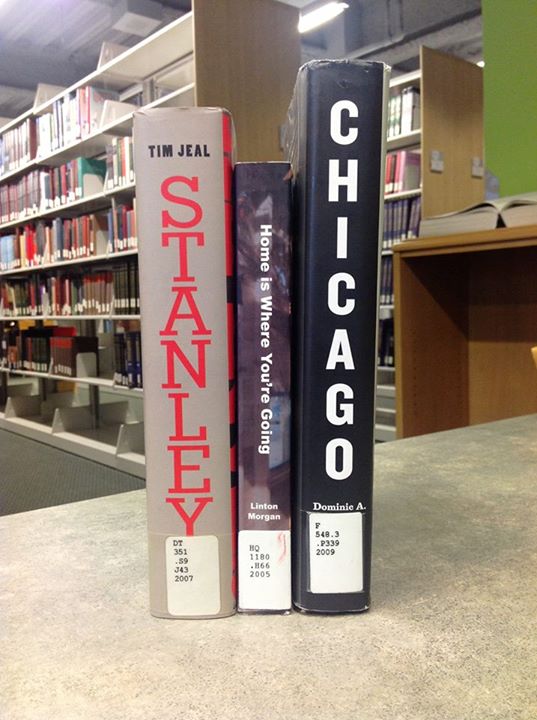
My co-worker actually created a wonderful book spine poem about the Stanley Cup and I published it later that day on both facebook and twitter.

That tweet has now been retweeted 5 times and is now one of our most “viral” tweets.

brandel blackhawks 2

A similar post on facebook (link here) currently has 17 likes which is above average for us as well.

Lessons Learned

  1. I would say engaging with big social movements like this is a good thing. It shows that the library is listening and is aware of what’s happening in the world.
  2. The best content is unique, shareable, and somehow related to your community. The first and third updates contained unique content and  passed this test whereas the second update does not. Perhaps retweeting is better engagement on a smaller scale (like if say NPU had won a championship) but it just adds to the noise on a national level.
  3. Pictures are very helpful – social media seems overwhelmingly visual.
  4. To summarize: engage big social movements with unique and shareable content.

Question

Despite the somewhat positive nature of these updates, I still have a few lingering questions:

  1. Is tweeting/posting about public sporting events unprofessional and/or not very library like? I think most academic libraries would object to putting a TV on the circulation desk during the game – do the same objections not apply to putting something up on social media?
  2. Should there be other guidelines? Responding to this seemed fine and even good to me – but I don’t think the library should tap into every tweeting topic on twitter. Or engage in controversial political topics. Or celebrity gossip news. I think there is a line – but where is it?

Encouraging Notes and Academic Libraries

For this past finals week, I had the idea to ask North Park University faculty and staff to write encouraging notes to students for finals week. The idea was quickly implemented and by the end of the week I had collected nearly 300 notes encouraging notes from a wide variety of faculty and staff. We placed these notes in a big bowl near the main entrance to the library and invited students to take a encouraging note from the bowl as a tangible reminder of the university’s encouragements.

bowl

Additionally, I selectively scanned a few dozen of the best and most creative cards and uploaded those images to our facebook page: here it the album of these encouraging notes! Some of my personal favorites are included below.

Overall, this project was a great success that really brought a boost to the library’s services as well as our social media accounts. It was great to be able respond to student’s frustrated tweets with links back to positive and encouraging words and the interplay between the print and digital was great as well. I will definitely think about doing something similar in the future!

Notecards E0003

Another semester of library social media

Like the building itself, the library’s social media accounts get much busier toward the end of each semester. Like last spring, I thought I could use storify to help tell the story of the Brandel Library as expressed online. Here is a link to the story created from the tweets, updates, and photos of the North Park community.

Last spring, I thought storify could be used to both demonstrate the value of social media and provide some expression of thanks to their community. And, I think both still hold true today! People tweet some really amazing and uplifting things about the library; collecting them provides a way to demonstrate the important place the library has in campus life. For example:


Twitter
Forgive the screen shot, archiving tweets is still being developed.

I’d like to hear how many other campus building have students publicly confessing their love for the building!

Being on twitter allows the library to hear what people think about the library and listen to how people feel.

Turning Tweets into Stories

I work in the technical services department of my library and I spend most of my time ordering and invoicing all the books for the Brandel Library at North Park University. It’s quite enjoyable (most of the time…) and most entries will be about my work and interest in the technical details of the library.

But, in addition to being the Acquisitions Coordinator, I’m also one of the library’s tweeters.

I (@ameyer24) began tweeting in 2008, but my library (@brandellibrary) started tweeting in March of 2012. I really love  tweeting for the library and am quite proud of the small following we’ve built and the conversations that we’ve entered into. In many ways, tweeting for the library is much easier than tweeting about my own life – mainly because I know the library can make big contributions to the conversations happening on twitter. It’s been great.

For this post, I wanted to share a tool I used that really encapsulated the value and importance of twitter. I used Storify to tell the story “Brandel Library, Finals Week, 2012“. Storify is a web service that “helps its users tell stories by curating social media.” I focused on just twitter, but Storify can also pull from facebook, youtube, flickr, instagram, google plus, and other websites. This flexibility and ease of use makes it an extremely valuable way to collect bits of social media and weave them into a compelling story.

I think this is especially important in an academic library setting. Storify can help libraries:

  1. Demonstrate the value of social media. I hear that many libraries have a difficult time demonstrating the value of social media. I think a carefully curated story shows (to a wary director, to the administration, to the wider campus community) the value and importance of entering those conversations. I think our story provides concrete examples about how twitter can benefit the community. Our story reveals how other patrons actively answered questions about the library. It tells us something about how people use the library space. It shows the pride some people have for the library. Twitter is no longer a ‘waste of time’ – it’s a new way we can demonstrate our value to the broader campus community.
  2. Thank their community. After creating and publishing the story, I sent out tweets thanking each person who contributed something to the story. Along with retweeting and responding, this was another way to show individuals how much their voices mattered to the library. Twitter is great because of the conversations it can create. I am careful not to use twitter as a place to post announcements – I want to use twitter as a way to engage patrons and communities in conversation. I want to have public conversations through twitter, not shout library announcements.

I’m surprised that I haven’t seen more academic libraries create and curate stories to Storify. It seems like a perfect way to weave discrete bits of media into a compelling story that demonstrates the value of social media and that rewards library patrons for sharing their experiences.

I’d love to hear or see how other libraries are using Storify to tell different stories. I’d also love to hear any one speak to whether/how Storify could be used to archive and preserve these digital conversations.