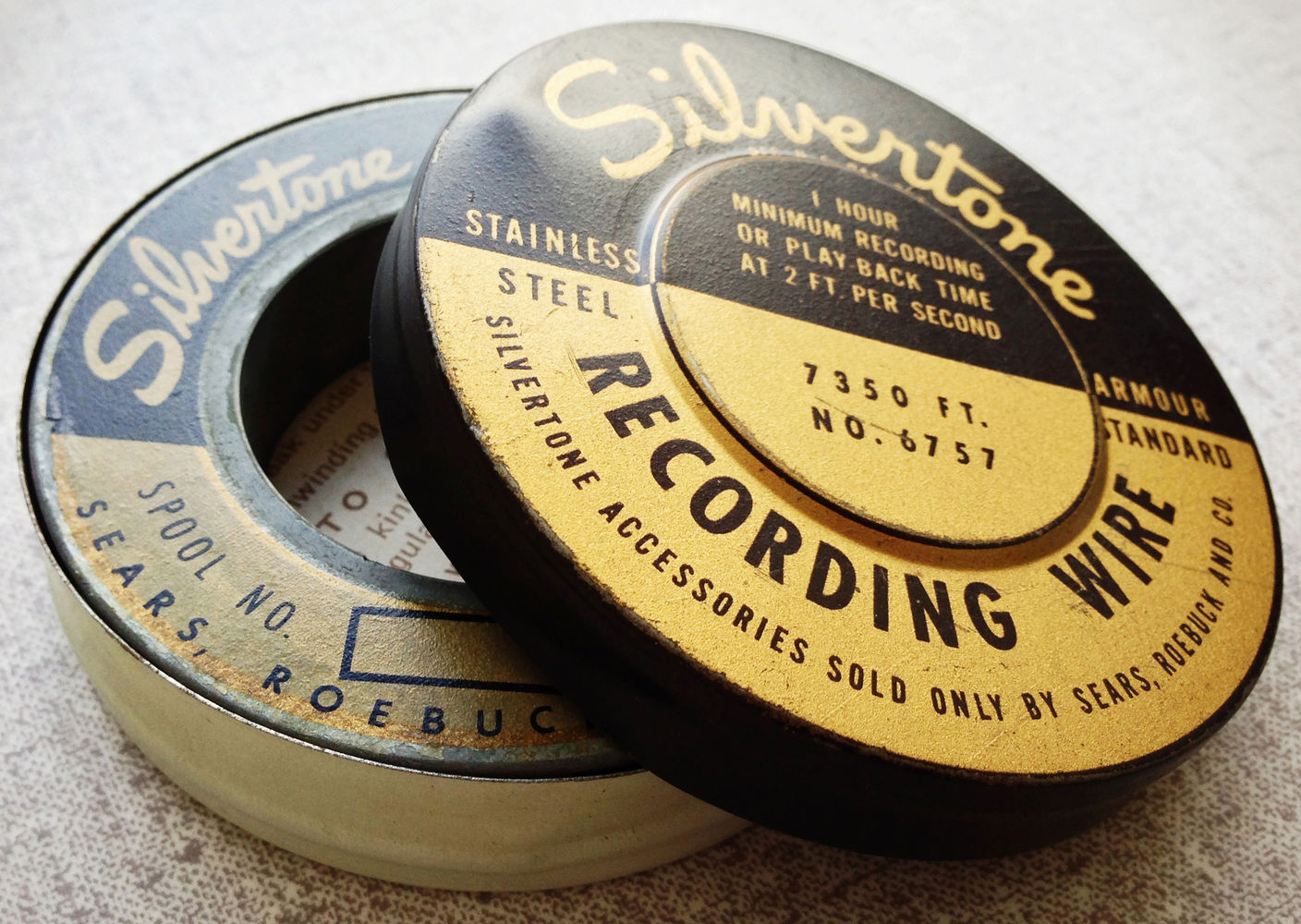
An interesting side project that I thought I could write about here. A neighbor asked me about digitizing some “Wire Recordings” that her grandfather had made of her family. I had never heard of this media format so I took to twitter to ask around:
@mediarchaeology any chance you have resources on digitizing recordings made on stainless steel wire? pic.twitter.com/ro9t4tqNaG
— Andy Meyer (@ameyer24) January 25, 2017
Apparently this format is relatively uncommon…
@ameyer24 we are all ogling over this picture! But unfortunately no we have nothing to help you with this – maybe try @footage?
— MediaArchaeologyLab (@mediarchaeology) January 25, 2017
… but not altogether unheard of. There are still experts in the field that can digitize (or at least try to digitize) this material.
@mediarchaeology @ameyer24 https://t.co/fh07HvzSDN is the acknowledge master; also maybe try https://t.co/0JWoECnAnr
— Rick Prelinger (@footage) January 26, 2017
So now I can provide the contact information of two people that specialize in this sort of work so that this person can get price quotes if they want to move forward.
More about Wire Recordings
I also learned a lot in the process! According to this website (http://www.obsoletemedia.org/wire-recording/) the media itself is relatively stable but the format is quite obsolete. More information can be found online in the following places:
- http://www.obsoletemedia.org/wire-recording/
- http://www.recording-history.org/HTML/wire9.php
- https://arstechnica.com/information-technology/2016/11/wire-recording-forgotten-audio-format/
I also found this video of a machine in action.