
Augmented Reality in Libraries

Presenters:

  • Speaker: Alexandra Van Doren, Web Management Librarian, University of Houston-Downtown
  • Speaker: Jovanni Lota, Information Literacy Coordinator Librarian, University of Houston-Downtown
  • Speaker: Lindsey Simard, Online Instruction Librarian, University of Houston-Downtown

Description:

Using a free augmented reality application, University of Houston-Downtown librarians have been working to create an engaging and memorable library orientation activity for students that will launch in Fall 2013. Come join us in this fun session to see how augmented reality is being used “in the wild” and brainstorm with us about ways this emerging technology could be used in libraries.

arrangement-107872_640

Reflection:

I’ve been interested in applications of augmented reality technologies and techniques for a little while now and I thought this presentation was a solid presentation about one school’s attempt to incorporate Augmented Reality into library instruction. As reported in this article, their project had four major goals:

  1. to orient students to library resources and services;
  2. to increase student retention of material;
  3. to reach out to students beyond traditional library instruction sessions; and
  4. to increase librarians’ “approachability” as perceived by students.

Their presentation began with a basic overview of augmented reality applications in other settings (business, publications, museums, etc.) that was helpful for context but was not new for those already familiar with augmented reality technologies but still helpful to encourage library thinking!

The pitfalls and limitations of augmented reality have been chronicled elsewhere, but I’m an optimist and want to focus on the positive and exciting potential for augmented reality in libraries. Here is a short list – inspired by their talk and later dreaming:

  • Library instruction/orientation. This is how the University of Houston was planning on implementing AR technology and it seemed very promising.
  • Bridge gap between print and digital. If a book is available in both print and electronic, use augmented reality to create link into digital. Creating additional access points – might be more symbolic than useful (but certainly more useful than QR codes!)
  • Navigation within the building.
  • Open up special collections – make a rare book or photograph collection more interactive.
  • Campus tours with interactive maps, pictures, media, etc.

Obviously, I think augmented reality technologies are great and have many potential applications in the library environment. I hope to be able to dedicate a bit more time to this in the future and keep learning about this emerging technology!
“Focus on People, Not Tools”

I just read this great article posted by Library Journal: here is a link to the article.

Here are two highlights and my reflections on them:

Focusing on the technologies rather than the outcomes changes the way we talk about these topics and the way we learn about them. When we aim for the outcomes, we’re more likely to think deeply about the problems we’re trying to solve and consider multiple strategies that speed us to our goals.

Let me be clear: I’m not downplaying the importance of technology in libraries or setting up a false dichotomy. As a profession, librarianship has developed many mechanisms to learn about technology and the web. This is important, and we need to keep learning about the broader world of resources that can help us efficiently deliver our services. But let’s shift our collective eye to learning about people first, so everything we know about technology can be put in service of supporting meaningful goals.

Yes! Too often I fall into the habit of thinking about technology as the end itself rather as a means to a greater end. I really shouldn’t care how many people like a particular post or follow us on twitter – I really should care about the online community that has gathered around the library and meeting their needs.

Our collective focus on technology also prevents technology from being as deeply integrated into our libraries as it should be. When we fetishize technology, we can only look at it shallowly. When we depend on emerging technology librarians to be the ambassadors for relevant technologies, we take the rest of the organization off the hook.

In fact, if we put the emphasis on people, library technology will become even more important. Currently, it is all too easy to implement tech solutions halfheartedly, check the box that the project is complete, and more or less be done with it.

Yes. I think this article is such a basic reminder that my excitement about libraries and technology is best understood in the broader context of meeting user needs. At least for me, there is a tensions between measuring quantifiable outputs (numbers of followers, number of circulations, etc.) and measuring qualitative outcomes (how patrons engage with the library online, how patrons use library resources, etc.) but that in the best possible world the assessment practices should be tied to both objective standards and to the broader goals.

Brandel Library and Hockey!

I’m still thinking a lot about how libraries can better engage with patrons and have found an unlikely area to test and ponder: NHL Hockey.

North Park University is located in Chicago and the Chicago Blackhawks just won the Stanley Cup (in thrilling fashion!). Knowing that the social media circles would be buzzing about this – I wondered if the library might be able to tap in and contribute to the conversation. So I decided to test the waters.

First Update

brandel blackhawks

After a thrilling overtime victory (in triple overtime!) I tweeted a short, semi-library related tweet that got three responses. Two replies and one retweet isn’t exactly going viral – but I think it’s still pretty good for most small academic libraries!

Second Update

After the Blackhawks won the Stanley Cup, the library retweeted the official Blackhawks account that said:

blackhawks

I don’t know what I was expecting, but this update got no response. But, then again, it’s wasn’t exactly new knowledge (currently, nearly 20,000 people have retweeted that exact tweet), it wasn’t really that shareable, and it wasn’t unique to North Park patrons.

Third Update

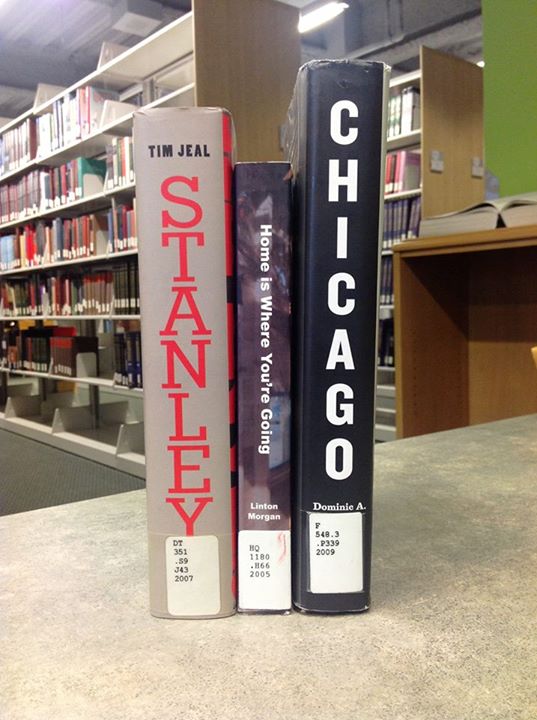
My co-worker actually created a wonderful book spine poem about the Stanley Cup and I published it later that day on both facebook and twitter.

That tweet has now been retweeted 5 times and is now one of our most “viral” tweets.

brandel blackhawks 2

A similar post on facebook (link here) currently has 17 likes which is above average for us as well.

Lessons Learned

  1. I would say engaging with big social movements like this is a good thing. It shows that the library is listening and is aware of what’s happening in the world.
  2. The best content is unique, shareable, and somehow related to your community. The first and third updates contained unique content and  passed this test whereas the second update does not. Perhaps retweeting is better engagement on a smaller scale (like if say NPU had won a championship) but it just adds to the noise on a national level.
  3. Pictures are very helpful – social media seems overwhelmingly visual.
  4. To summarize: engage big social movements with unique and shareable content.

Question

Despite the somewhat positive nature of these updates, I still have a few lingering questions:

  1. Is tweeting/posting about public sporting events unprofessional and/or not very library like? I think most academic libraries would object to putting a TV on the circulation desk during the game – do the same objections not apply to putting something up on social media?
  2. Should there be other guidelines? Responding to this seemed fine and even good to me – but I don’t think the library should tap into every tweeting topic on twitter. Or engage in controversial political topics. Or celebrity gossip news. I think there is a line – but where is it?

Encouraging Notes and Academic Libraries

For this past finals week, I had the idea to ask North Park University faculty and staff to write encouraging notes to students for finals week. The idea was quickly implemented and by the end of the week I had collected nearly 300 notes encouraging notes from a wide variety of faculty and staff. We placed these notes in a big bowl near the main entrance to the library and invited students to take a encouraging note from the bowl as a tangible reminder of the university’s encouragements.

bowl

Additionally, I selectively scanned a few dozen of the best and most creative cards and uploaded those images to our facebook page: here it the album of these encouraging notes! Some of my personal favorites are included below.

Overall, this project was a great success that really brought a boost to the library’s services as well as our social media accounts. It was great to be able respond to student’s frustrated tweets with links back to positive and encouraging words and the interplay between the print and digital was great as well. I will definitely think about doing something similar in the future!

Notecards E0003

Updating to Omeka 2.0

I’ve written about my personal project using the Omeka tool in the past, but wanted to provide an update that I recently updated to Omeka 2.0. Here is the news piece from the Omeka blog: http://omeka.org/blog/2013/01/24/omeka-2-0-drops-today/

However, updating from my previous install to the brand new 2.0 version took a little work – especially because I made a relatively major mistake in (somehow) deleting one of the thumbnail files that Omeka requires. The site is working, but I learned a few valuable lessons in the process.

  1. Back up all files. I had to rely on the back up service that bluehost provides. Well that worked just fine in this case, it was scary to think that data might have been lost. Lesson learned.
  2. Open source rocks. I had to post a question on the Omeka help forum and was amazed at the quick and helpful response. Also, reading through the other postings was extremely helpful in seeing what the problems are and seeing what others are trying to do. It was great.
  3. DYI is the way to go. Even though I had a few hours of fear and confusion, doing this myself has taught me so much about websites work and are built. Even without changing the files, I’m getting a better sense of how things like SQL, PHP, and CSS all relate to each other.

I could offer a more technical version of how to do this install – but following the steps they have posted eventually worked for me. I’ll update more as a I play around in Omeka 2.0, but wanted to share my progress so far.

Another semester of library social media

Like the building itself, the library’s social media accounts get much busier toward the end of each semester. Like last spring, I thought I could use storify to help tell the story of the Brandel Library as expressed online. Here is a link to the story created from the tweets, updates, and photos of the North Park community.

Last spring, I thought storify could be used to both demonstrate the value of social media and provide some expression of thanks to their community. And, I think both still hold true today! People tweet some really amazing and uplifting things about the library; collecting them provides a way to demonstrate the important place the library has in campus life. For example:


Twitter
Forgive the screen shot, archiving tweets is still being developed.

I’d like to hear how many other campus building have students publicly confessing their love for the building!

Being on twitter allows the library to hear what people think about the library and listen to how people feel.

Review of “Doing social media so it matters: a librarian’s guide”

Solomon, Laura. Doing Social Media So It Matters: A Librarian’s Guide. ALA Editions, 2011.

I was excited about this book. At only 65 pages, it seemed like a quick read that could point toward some best practices and fresh ideas about social media in the context of libraries. It was clear and well written and provided a good introduction. However, I was slightly disappointed – disappointed that it didn’t cover everything I had hoped and disappointed that such a book was even required to remedy some of the social media blunders libraries still make.

One major reason it was disappointing was its target audience seemed to be people with no background in social media. One way to perceive this is by interpreting the first line from the back cover summary:

Facebook, Twitter, MySpace, LinkedIn: it’s difficult enough to keep abreast of social media Web sites, let alone understand how they fit into today’s library.

If you nodding and thinking “Finally! A book to explain this!” – then you might like this book. However, if you are shuddering and thinking – “No, I pretty much understand these sites.” and/or “Why is MySpace listed?” – then you may want to avoid this book.

Most of the introduction and general advice is accurate and clear, but it is also very basic. “Interact with people in social media, or risk becoming irrelevant.” (p.3). That’s accurate, clear, and even good advice. But what misconception is that clarifying? Who is that helping? Sadly, this information should help librarians! Other studies (for example, Academic Libraries on Facebook: An Analysis of Users’ Comments) have demonstrated that many librarians completely ignore this principle – “Based on this study, the total number of comments on library Facebook pages would be significantly lower overall if it were not for the library staff posting on their own library walls and commenting every few weeks.” A particularly irritating habit – libraries liking their own Facebook status – is one example that demonstrates how out of touch some institutions are with the norms of social media. Sadly, many libraries need the basic reminders that Solomon provides in her book.

My second complaint is that some of the practical advice she offers simply isn’t compelling. On a section titled “Status Update Makeovers” she views this as an ineffective update:

The internet computers are not available due to maintenance.

I’ll admit this tweet is  impersonal and formal; but I don’t see how her remade example is substantively better:

Argh! Power surge took down a server – no Internet here this morning, sorry!

I don’t know how/whether the “Argh!” or the exclamations points – and 4 of her 5 good examples have exclamation points! – make the posts more personal or emotional. In fact, a recent article in the Atlantic shows that, for news related tweets, the perfect tweet is actually “kind of boring”. If her goal in writing is to make social media “matter” – I can’t see how her remade tweets “matter” any more.

Without stereotyping or being too harsh, this book fits the standard library model – to learn about a subject, you buy a book (in this case, a $37 book!). The advice is good, basic, and (quite sadly) still important for libraries to hear. However, if you already have a grasp of social media, this book might be disappointing. Final verdict: this book is useful, but isn’t life changing.

Turning Tweets into Stories

I work in the technical services department of my library and I spend most of my time ordering and invoicing all the books for the Brandel Library at North Park University. It’s quite enjoyable (most of the time…) and most entries will be about my work and interest in the technical details of the library.

But, in addition to being the Acquisitions Coordinator, I’m also one of the library’s tweeters.

I (@ameyer24) began tweeting in 2008, but my library (@brandellibrary) started tweeting in March of 2012. I really love  tweeting for the library and am quite proud of the small following we’ve built and the conversations that we’ve entered into. In many ways, tweeting for the library is much easier than tweeting about my own life – mainly because I know the library can make big contributions to the conversations happening on twitter. It’s been great.

For this post, I wanted to share a tool I used that really encapsulated the value and importance of twitter. I used Storify to tell the story “Brandel Library, Finals Week, 2012“. Storify is a web service that “helps its users tell stories by curating social media.” I focused on just twitter, but Storify can also pull from facebook, youtube, flickr, instagram, google plus, and other websites. This flexibility and ease of use makes it an extremely valuable way to collect bits of social media and weave them into a compelling story.

I think this is especially important in an academic library setting. Storify can help libraries:

  1. Demonstrate the value of social media. I hear that many libraries have a difficult time demonstrating the value of social media. I think a carefully curated story shows (to a wary director, to the administration, to the wider campus community) the value and importance of entering those conversations. I think our story provides concrete examples about how twitter can benefit the community. Our story reveals how other patrons actively answered questions about the library. It tells us something about how people use the library space. It shows the pride some people have for the library. Twitter is no longer a ‘waste of time’ – it’s a new way we can demonstrate our value to the broader campus community.
  2. Thank their community. After creating and publishing the story, I sent out tweets thanking each person who contributed something to the story. Along with retweeting and responding, this was another way to show individuals how much their voices mattered to the library. Twitter is great because of the conversations it can create. I am careful not to use twitter as a place to post announcements – I want to use twitter as a way to engage patrons and communities in conversation. I want to have public conversations through twitter, not shout library announcements.

I’m surprised that I haven’t seen more academic libraries create and curate stories to Storify. It seems like a perfect way to weave discrete bits of media into a compelling story that demonstrates the value of social media and that rewards library patrons for sharing their experiences.

I’d love to hear or see how other libraries are using Storify to tell different stories. I’d also love to hear any one speak to whether/how Storify could be used to archive and preserve these digital conversations.