Graduation and Commencement

After four semesters and countless hours of work, I’m slated to graduate from Library School this weekend. I’m actually not able to attend the graduating ceremony but I thought I would take some time to consider what this means for me on a personal level.

I recently toured a special exhibition in the Art Institute of Chicago that features Van Gogh’s bedroom paintings. It was a fabulous exhibition that provided a lot of information the paintings and the painter. But one line from the exhibit stands out to me as particularly relevant to this time of my life. A panel describing Van Gogh’s decision to become an artists borrows Van Gogh’s own language – through a letter to his brother Theo – which provided language for my current season.

In 1880 Van Gogh decided that art was his true calling. Describing his decision to his brother Theo, he used the language not of professional choice but of belonging: “I often feel homesick for the country of paintings.”

-page 17, Groom, Gloria Lynn, and Allison Perelman. Van Gogh’s Bedrooms. 2016.

Borrowing this language – without comparing myself to this master painter! -I want to explore libraries and librarianship not as a professional choice but as a sense of belonging. In focusing on this sense of belonging, I do not want to downplay the professionalism of librarians nor the important decisions that I’ve made that have brought me to this place. I feel strongly, however, that the appropriate way to understand these identifiers is from a place of “belonging”

This is plainly true in one sense of the word: I belong to group of professionals bound by professional practice and ethics. I belong to a group of co-workers here at North Park focused on student success. The Dean of GSLIS was also quick to point out that I belong to the group of GSLIS alumni – over 10,000 strong! – with the implication that I should also belong to the subset of alumni that support the school through financial gifts. I also belong to the American Library Association, and, recently, the Chicago Area Archivists association.

These ways of “belonging” are important but – as I hear in Van Gogh’s letter – I mean something a bit more direct. I belong to libraries.

I belong to the Grand Rapids Public Library – especially the West Leonard branch – where I remember visiting frequently growing up and revisiting over holiday breaks when I needed peace and quiet to study.

I belong to the libraries in my middle school and high school where I found marvelous books and a shelter from the storms of adolescence.

I belong to the D’Angelo Law Library at the University of Chicago where I found I could flourish in libraries.

I belong to the Chicago Public library where I found practical resources – a quiet place to study and apply for jobs – and deeper joy and inspiration.

But mostly, I belong to my beloved Brandel Library at North Park University. Perhaps more than any other place in my life, this place testifies to my personal and professional transformations. I dare not try to offer a complete chronicle; only to say that these transformations have been profound. The library has been been, at times, a neutral place that has been witness to these developments and, at other times, a charged catalyst that has fostered and created this sense of belonging.

Belonging and Membership

In thinking about this post and reflecting on graduating using Van Gogh’s words, I’ve started thinking a lot about the term “membership” and thinking about whether “belonging” or “membership” is a more appropriate framing device for these graduating and commencement reflections.

When I think about the term “membership, my definition draws heavily from St. Paul and Wendell Berry. St. Paul writes:

For as the body is one, and hath many members, and all the members of that one body, being many, are one body: so also is Christ.

1 Corinthians 12:12

And Wendell Berry, drawing on language from St. Paul, writes about the fictional community of Port Williams:

The way we are, we are members of each other. All of us. Everything. The difference ain’t in who is a member and who is not, but in who knows it and who don’t.

That Distant Land, 356

Even though I like the direct, emotive language of belonging, I think that membership language reflects the reciprocal relationships that are created through belonging – relationships between person and place and relationships between individuals – and the mutual obligations that we are called to respect.

I have a tendency to keep things like this in draft forever – so I’m going to publish this post with the understanding that these ideas are still in flux and that I’m likely to revisit this post in the future.

“This is how I study”

Just wanted to jot down an idea and try to fill out in a semi-public space.

I’ve been thinking a bit about library instruction, social media, and creating a learning culture at North Park. One idea – based deeply on lifehacker posts “How I work” – is for North Park to try and create a “This is how I study” video series. I think it would be awesome for the following reasons:

  • Would allow and encourage peer to peer instruction.
  • Would create content for our social media campaigns.
  • Would allow librarians to do instruction on a personal basis as well as on make that content available to a wider audience.
  • It would be interesting! Do students listen to music? Work in the library or their apartment?
  • I would imagine these stories (videos? webpages?) could be linked from social media as well as embeded in libguides.
  • I wonder if it could fit in existing structures (like the writing center, tutoring program, or capstone classes) or whether it would be separate.

That’s my emerging idea. Will run it by some people here at North Park to see what people think.

Edit: This idea is also very similar to the ACRL’s recurring post “Memeber of the Week”

Notes/Brainstorming for the CATLA Panel on Open Access

Notes/Brainstorming for the CATLA Panel on Open Access

Introduction

What qualifies me to speak on this panel? Not too much!
Digital Information Specialist at North Park University

  • Recent seminary graduate
  • Served as TA for the “Covenant Quarterly” for two years.
  • *Wrote thesis on the History of Covenant Publications

In my thesis, I borrowed language from an early education leader in the Covenant, David Nyvall, who wrote about two somewhat opposing forces in the early Covenant that “together they represented a centripetal and a centrifugal power within the Covenant which was jointly beneficial” and argued that publishing was a centripetal force that institutional leaders used to try and gather the people of the Covenant.
In preparing for this CATLA panel, I thought I would try to use this set of metaphors – drawn from physics – as a metaphorical framework for this discussion.

I’ll first talk about the three images – Centripetal Force, Inertia, and Energy – before moving to a discussion of the Covenant Quarterly’s slow transition to an OA journal.

Centripetal Force – a movement toward the center.

Is theological publishing inherently centripetal – i.e. a force tending toward the center?

Other forms of publishing – including digitizing unique and special collections, publishing student research in institutional repositories, etc. – are also centripetal (if only in the sense of drawing people toward a given institution.

Centrifugal Forces – movements away from the center.

OA is certainly a move away from some of the big vendors and aggregators

I wonder how Smith would respond to this language. I sense in your writing that you perceive the OA movement as a diffusion of power and would perhaps disagree with the notion that publishing, at some least some publishing or some OA attempts, are centripetal.

  • Context: NPU is currently looking at Institutional Repository software that would allow us to publish and make available faculty research, student papers, and (perhaps) the Covenant Quarterly.
  • Library people – motivated by many of the reasons Smith mentioned
  • Greater Access
  • Alternative to the “market” economy of articles
  • Making available unique and otherwise inaccessible resources
  • Administrators – seemingly still motivated by the commodities market.
  • Increase the value of the North Park brand.
  • Useful recruitment, retention, and development tool.
  • Are these goals contradictory? Or, will they eventually come into conflict?

Smith’s blog entry, quoting an article by Rick Anderson that discusses “commodity” and “non-commodity” gives different language to this question.

So libraries should definitely focus on local resources, but those resources include content created on campuses that has previously been considered commodities. The goal of library publishing activities should be to move some of that content — the needs and wishes of the faculty authors should guide us — off of the commodity market entirely and into the “gift economy” along with those other non-commodity documents that Anderson encourages libraries to publish.

Inertia – resistance of any physical object to a change in its motion

Neither a force nor an energy – merely a property

  • Keep still – difficult to change publishing and thought models.
  • Keep moving – difficult to know when to stop moving.

In writing this, I had a not-so-profound realization that everything else in the theological and/or scholarly publishing system also has inertia (print publishing, old subscription models, etc.) and some of those forces are strongly supported by large corporations.
the inertia of libraries is great too. Without a crisis, how can libraries overcome the inertia that is simply of property of organizational life?

Energy – the capacity for doing work.
Lack of energy in the theological education system.

Lack of energy in theological libraries?
Staffs are stretched thin and overworked.

Are libraries ready to take on challenge and opportunity of OA publishing that Smith proposes?

If libraries refocus their missions for a digital age, they will begin to become publishers not just of unique materials found in “special” collections, but also of the scholarly output of their constituents. This is a service that will grow in importance over the coming years, and one that is enabled by technologies that are being developed and improved every day. Library publishing, with all of the attendant services that really are at the core of our mission, is the ultimate answer to how libraries should address the problem described only partially by the Science “sting” article.

In another article, Smith has hopes for associations and professional organizations to take the role in leadership. How realistic is this – particularly in terms of technology?

Covenant Quarterly

Up until now, the Covenant Quarterly has lacked the Energy to overcome the Inertia of old models (that is as a subscription based print publication) and because of this, the Covenant Quarterly’s Centripetal Force has weakened.

  • In many ways, the Covenant Quarterly is a “Best Case” scenario for open access.
  • Loss of subscription revenue not a substantial loss.
  • Only 71 paid subscriptions – 52 of which are institutions (libraries or churches)
  • Sent for free to 2,052 Covenant pastors.
  • Financially subsidized by the North Park Theological Seminary, Covenant Denomination, and Covenant Communications.
  • A “double pay” model for at least some theological publishing.
  • Fear of prestige and concerns about tenure are – I believe – quite minor given the scope of this publication.
  • Much to gain (and very little to lose!) in the move toward OA
  • National and international reach (old model involved mailing publications to missionaries, etc.)
  • Most authors would welcome a wider audience.

Recommendations, Suggestions, Questions

What are your recommendations to us?!
Theological libraries should make this imperative! Right now, I think the move toward OA is viewed as “non-essential” and difficult by those in leadership.
No “White House directive” for theological publishing.

At least treat OA titles the same as paid print or electronic publications.

Can/should libraries take the lead the move toward OA – especially in the area of technology? I think that is the largest area of question and lack.

Connect the broadest goal of the publication – in this case, the Centripetal Force it hopes to exert on the Covenant Church – to the publication model and devout energy to overcoming the inertia keeping it in place.

Augmented Reality in Libraries

Presenters:

  • Speaker: Alexandra Van Doren, Web Management Librarian, University of Houston-Downtown
  • Speaker: Jovanni Lota, Information Literacy Coordinator Librarian, University of Houston-Downtown
  • Speaker: Lindsey Simard, Online Instruction Librarian, University of Houston-Downtown

Description:

Using a free augmented reality application, University of Houston-Downtown librarians have been working to create an engaging and memorable library orientation activity for students that will launch in Fall 2013. Come join us in this fun session to see how augmented reality is being used “in the wild” and brainstorm with us about ways this emerging technology could be used in libraries.

arrangement-107872_640

Reflection:

I’ve been interested in applications of augmented reality technologies and techniques for a little while now and I thought this presentation was a solid presentation about one school’s attempt to incorporate Augmented Reality into library instruction. As reported in this article, their project had four major goals:

  1. to orient students to library resources and services;
  2. to increase student retention of material;
  3. to reach out to students beyond traditional library instruction sessions; and
  4. to increase librarians’ “approachability” as perceived by students.

Their presentation began with a basic overview of augmented reality applications in other settings (business, publications, museums, etc.) that was helpful for context but was not new for those already familiar with augmented reality technologies but still helpful to encourage library thinking!

The pitfalls and limitations of augmented reality have been chronicled elsewhere, but I’m an optimist and want to focus on the positive and exciting potential for augmented reality in libraries. Here is a short list – inspired by their talk and later dreaming:

  • Library instruction/orientation. This is how the University of Houston was planning on implementing AR technology and it seemed very promising.
  • Bridge gap between print and digital. If a book is available in both print and electronic, use augmented reality to create link into digital. Creating additional access points – might be more symbolic than useful (but certainly more useful than QR codes!)
  • Navigation within the building.
  • Open up special collections – make a rare book or photograph collection more interactive.
  • Campus tours with interactive maps, pictures, media, etc.

Obviously, I think augmented reality technologies are great and have many potential applications in the library environment. I hope to be able to dedicate a bit more time to this in the future and keep learning about this emerging technology!

Omeka updates

In the very little spare time I manage to find, I still try and update my personal family archive project. Again, it’s been a great experience working with a wonderful (and very personal collection!) and I’ve learned so much. I feel like I should write a little about that project here to show what I’ve learned.

People – This was surprisingly difficult and I dithered on this for quite sometime. First, I created a controlled vocabulary of sorts using the person’s official birth (therefore maiden) name. Then I decided to use the tagging system within Omeka to describe the people in the resource. For the intended audience, this is perhaps the most important piece of metadata and I wanted it featured prominently.

Date – trying hard to use the international standard yyyy-mm-dd consistently through out this project. Inferred dates are entered in square brackets [] and partial dates are left incomplete.

Language – for the few items I’m including that have a language component, I’m using a controlled vocabulary (via the Simple Vocab plugin) to describe the language of these resources. Right now it’s just English and Dutch.

iPad apps for Libraries and Library People

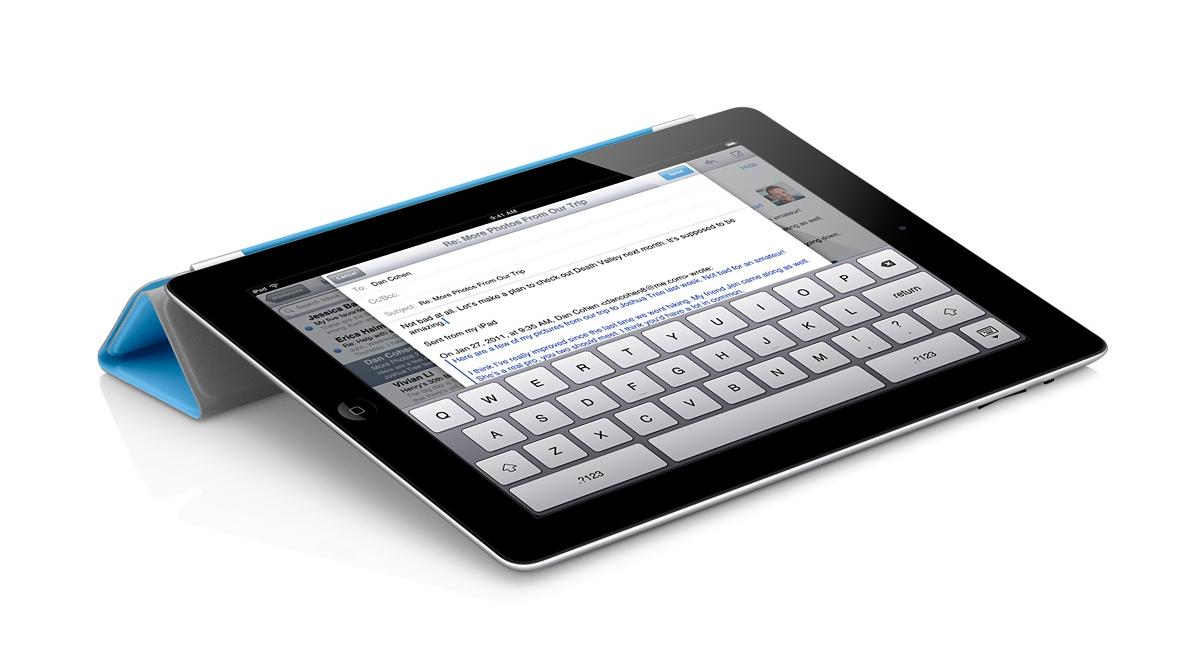
Lots and lots of websites lists the “Best Apps” for libraries and librarians. So, to that deluge, I thought I would add another. My library is getting five iPads to circulate to current students, faculty, and staff, and I’ve been asked to help come up with a list of apps to add to them. The focus is on free and library specific.

The last section – Personal – lists apps that I use on my personal iPad but would have limited application (no pun intended) on a iPad that is loaned for a few hours. The rest of the apps should be good on a shared iPad – though some will require personal accounts to fully use them

(I hope to update this page frequently so as to stay current!)

Productivity

  • Dropbox – I personally use Dropbox all the time and think it’s wonderful. I’ve never compared it to other cloud based storage systems because I’ve never had any problems.
  • Evernote – I truthfully don’t use Evernote as much as I would like to – and have never really understood why. I use the Apple “Notes” app and this interchangeably to store short, mostly unimportant text. Evernote seems like a racecar that I’m content to idle in the driveway. But it’s nice to have in the driveway.
  • Gmail – If you use gmail you should use this app.
  • Google – Not essential, but makes googling things easier. And I google things like it’s my job.
  • Wikipanion – Wikipediaing things is my part-time job.
  • Paper – This drawing app is great for sketching out ideas and brainstorming. Though the app is free, the new brushes and colors are very tempting.

News and Information

  • NPR – Still my go to source for news.
  • PBS – A close number two.
  • TED – A smarter, more interesting youtube.

Reading

  • Kindle – I know they don’t play nicely with libraries, but this is my preferred ebook reader.
  • Poetry – This is an amazing app that really is perfectly suited and formatted for a tablet. Very fun.
  • Stanza – I don’t use this app personally, but it was highly recommended.
  • Hathitrust – Not an app, just a link to their mobile website.
  • WorldCat – Not an app, just a link to their mobile website. Truthfully, the standard WorldCat site works perfectly well on an iPad.

Social Media

  • Twitter – The official twitter app is still my favorite app. Call me old fashion, I guess.
  • Facebook – It’s a juggernaut.
  • Pinterest – Very nice app that makes pinning even easier.
  • Pandora – I usually listen to my own music, but this seems like a good app to include on loanable iPads.
  • Instagram – The Brandel library is surprisingly very popular on instagram.
  • Youtube – Everything from technology tutorials to funny dog videos.

Website Shortcuts

Personal

  •  [Coming Soon!]